
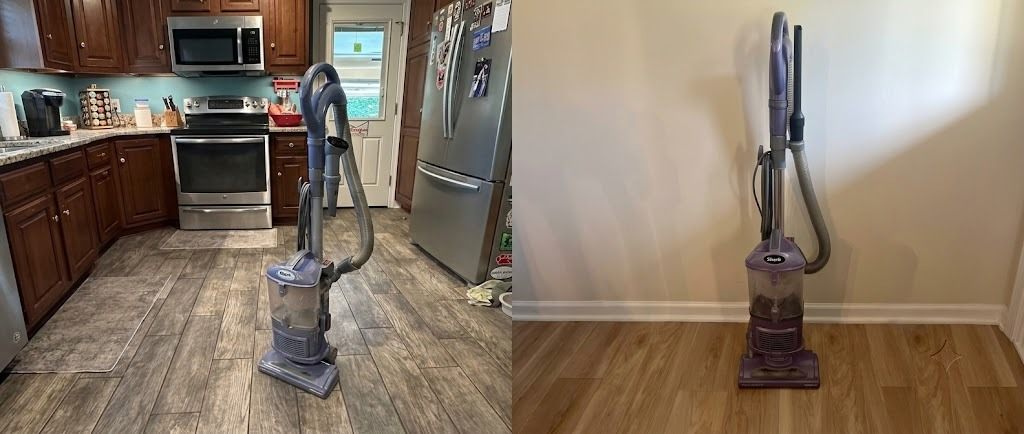
When I compare the Shark NV351 and NV352, I see two model numbers attached to essentially the same Navigator platform.
The important difference is not motor power or floor-cleaning hardware. Both use the exact same basic vacuum chassis and motor. Where the retail configurations actually diverge comes down to two things: exterior color and the bundled attachment package. Once I separate those two things, the choice becomes much simpler.
Under the hood, these are mechanical twins. Every physical behavior described below applies identically to both models.
The Motor and Dust-Cup Claims I Would Ignore
I would not choose between these models based on online claims that the NV351 has a weaker motor or that the NV352 has a larger dust cup.
Both are specified at 1200 watts and 10 amps, while the capacity for this configuration is 1.2 dry quarts to the Max Fill line. I would not substitute specifications from other Navigator models simply because a retailer has mixed information between similar model numbers.
These details can make two nearly identical vacuums look dramatically different on paper when the actual distinction is much simpler.
How this shared design actually performs becomes obvious the moment I guide it across a real floor.
The Swivel Steering lets the floor head pivot cleanly around furniture rather than forcing me to muscle the upright back and forth in rigid lines. Around dining chair legs, a subtle flick of the wrist angles the nozzle, and the body swings in behind it instead of fighting my direction.
The brushroll control introduces a distinct physical transition right through the grip. On carpet, the powered brushroll creates a steady mechanical whir as it works against the fibers, making the floor head feel more planted as I push. Switching to Bare Floor mode stops the brushroll, the resistance disappears, and the nozzle moves more freely across a hard surface.
The Suction Release Collar is simple but useful. When an area rug or lightweight upholstery starts grabbing the nozzle, twisting the collar changes the airflow. I can hear the immediate rush of escaping air as the nozzle lets go, saving my arm from fighting against the material’s grip. It is a small mechanical control, but one I notice with my fingers rather than read on a specification sheet.
There is, however, an ergonomic nuisance common to this corded design: the upright unit can turn into an anchor.
When I pull the hose farther than the upright naturally wants to travel, the hose pushes back against the standing base. On a smooth floor, pulling the wand too far from an awkward angle can drag the upright toward me; if I pull too sharply, the machine can start to tip rather than staying firmly planted. It is not a dramatic flaw, but it creates a constant tug-of-war where the base wants to stay still while the hose wants to reach somewhere else.
The 25-ft power cord covers a typical living room without frequent outlet changes. However, the thick cord can still get in my way. I often have to guide it aside with one hand while pushing the floor nozzle.
Lift-Away: The Same Mechanism, Different Physical Position
Both models use the same Lift-Away concept, and this is where the Navigator design makes the biggest difference away from the floor.
I press the release, feel the plastic latch give, and the pod separates from the upright with a distinct mechanical click. In my hands, the machine immediately becomes shorter and easier to position because I am no longer carrying the full upright assembly.
On stairs, that matters.
The detached pod weighs approximately 7.5 pounds, compared with roughly 12.5 pounds for the assembled upright. Carrying the pod up several steps is more manageable than trying to balance the complete upright on each tread, but Lift-Away does not erase the weight.
By around the fifth stair, the pod can still feel substantial in my hand; with my arm extended toward the next tread, that weight settles into my wrist and forearm rather than disappearing just because the vacuum has detached.
The benefit is really about where the weight is and how I can position the vacuum, not about making the machine feel lightweight.
Using the Specialized Cleaning Tools
The included tools can vary by retailer or specific package, so I would not treat any single accessory as a fixed NV351 or NV352 specification. What matters more in actual use is how useful the available tools are for the spaces I need to reach.
A long crevice tool is particularly useful in places where the main floor nozzle simply cannot fit. When I slide it between a sofa cushion and the frame, the narrow tip lets me work along the seam without having to move the furniture. I can feel the nozzle lightly dragging against the fabric as I work it deeper into the gap, while the suction pulls loose crumbs and hair toward the opening.
The extra reach is also useful around appliances. When I reach behind a dryer or along the narrow space beside a refrigerator, I can keep the upright farther back while extending the tool into the gap. For higher surfaces, such as the top edge of a refrigerator or cabinet, that extra length lets me reach farther without repeatedly repositioning the main vacuum body.
For upholstery, a small brush attachment can feel very different from the bare crevice nozzle. The bristles make light contact with fabric rather than simply scraping across it, and I can feel the tool catching against areas where pet hair and fine debris have worked into the surface. On a fabric chair or sofa, I prefer that controlled brushing motion for loosening hair before the suction carries it away.
The important point is that I would judge the tools by the cleaning situations they solve, not by assuming that every NV351 or NV352 sold today has exactly the same attachments.
Both models use HEPA filtration with Anti-Allergen Complete Seal Technology and washable foam and felt pre-motor filters.
The maintenance routine is therefore essentially the same.
The filters need to be removed, rinsed as directed, and allowed to dry completely before going back into the vacuum. After washing the foam and felt filters, I would allow at least 24 hours to air-dry completely before reinstalling them. Putting them back while they are still damp is an easy mistake to make, but it can introduce moisture where it does not belong and may contribute to mold or other problems over time.
Washable Filters Still Need Regular Maintenance
This is also one of those ownership details that is easy to ignore until the vacuum reminds me.
A washable filter is not a maintenance-free filter. If I let dust build up and keep postponing the rinse, the filter gradually becomes another layer the airflow has to work through. After a long stretch of neglect, opening the vacuum can bring a stale, dusty smell back into the experience that I would much rather avoid.
The filter is almost like the vacuum’s lungs: if I keep asking it to breathe through a dirty layer, I should not be surprised when the machine stops feeling as fresh and free-flowing as it did when clean.
That does not make the NV351 or NV352 uniquely problematic. It is simply the less glamorous side of owning a washable-filter vacuum. The easy part is knowing the filter can be washed; the part people quietly skip is actually washing it and letting it dry completely before reinstalling it.
The Traditional Brushroll Still Needs Hair Maintenance
There is another maintenance reality I would keep in mind with a traditional powered brushroll: hair does not care how clean the rest of the vacuum looks.
Long strands can wind tightly around the brushroll and gradually wrap around the ends of the roller. Instead of disappearing into the dust cup, the hair can become a thin, stubborn rope wrapped around the spinning assembly. I have to stop, unplug the vacuum, inspect the roller, and remove the buildup manually when it becomes noticeable.
There is no automatic hair-cutting system doing that job for me here.
For homes with long human hair or shedding pets, this is the kind of maintenance that can be easy to postpone because the vacuum still turns on and runs. But the brushroll quietly keeps collecting the evidence underneath.
What I Would Not Pay Extra For
I would not pay more for the NV352 because a listing claims it has:
- A stronger motor
- Higher wattage
- A larger dust cup
- A longer power cord
- A wider cleaning path
- A different Lift-Away mechanism
- Better swivel steering
- A fundamentally different filtration system
Those claims blur the distinction between the two configurations.
If I pay more for the NV352, I want the extra money to correspond to a real difference, not an imaginary performance upgrade.
How to Choose the Right Retail Bundle
The Shark NV351 and NV352 are very similar machines, so the decision isn’t really about cleaning performance. In practice, the bigger differences come down to price, condition, and the accessories included with each package.
You find it for less. If the NV351 is available at a noticeably lower price, especially as a renewed or refurbished unit, it can be a practical way to get essentially the same core vacuum without paying extra for the model number. Both models use a 1,200-watt motor platform, and the basic floor-cleaning setup is very similar.
You only need the basics. If most of your cleaning involves carpets and bare floors and you rarely reach for specialized attachments, there’s little reason to pay more for a bundle filled with tools you won’t use.
The price difference is small. When the two models are priced similarly, the NV352 may make more sense if you prefer buying a new unit from a retailer with a straightforward warranty and return policy.
You’ll actually use the extra attachments. Check the specific retail listing before buying, since accessories vary. Choose the NV352 package if its particular bundle includes the specialized upgrades you need—like an extended appliance wand or a motorized pet tool—rather than buying them separately later.
The Bottom Line
The NV351 and NV352 are close enough in their core design that cleaning performance shouldn’t be the deciding factor. Instead, look at the actual package you’re buying: the current price, whether the unit is new or renewed, the warranty and return terms, and—most importantly—the attachments included in the box.
If the NV351 is significantly cheaper and comes with the tools you need, it can be the better value. If the prices are close, the NV352 may be worth choosing for the particular accessory bundle and purchase terms you’re getting.
In other words, don’t choose based on the model number alone. Compare the actual listings side by side and buy the package that gives you the features and accessories you’ll realistically use.